
Colour in the landscape is a great pleasure, providing mood, atmosphere and is a clear indicator of the seasonal changes around us.
At SSB Garden Design we carefully source plants and trees that combine well together to create harmonious, tranquil and dramatic effects. Hues are not constant and the rules of colour harmony are flexible; our perceptions of colour are subjective which alters the essence accordingly. The combination and proximity of other plant colours can also result in transitions, while changes occur due to the latitude and position of your garden as well as the fleeting nature of light. Northern light tends to be more blue which dilutes flower colour and favours subtle hues. Nearer the equator, the light becomes more yellow and calls for stronger flower colours. In the morning light, colours are at their most intense and by midday the light is strong, reducing the intensity. In the evening, light is more subdued with whites and pastels looking luminous. As the day progresses and the seasons change, different parts of your garden space may become more or less suitable to relax within or enjoy.
At SSB Garden Design, we apply colour theory to add further dimensions to your garden with beautiful effect. We juxtapose colours that have a close affinity in the rainbow spectrum such as red and orange or blue and green to intensify the impact of each colour. Every colour has the ability to change the physical appearance of its neighbour and we use a painter’s palette of foliage and flower colour, tints and tones to achieve this. We use single tones, or a mix but we often use unusual colour combinations such as burnt orange, rust-red, lime-green and deep purple, or chocolate, purple and lemon for a stylish effect.
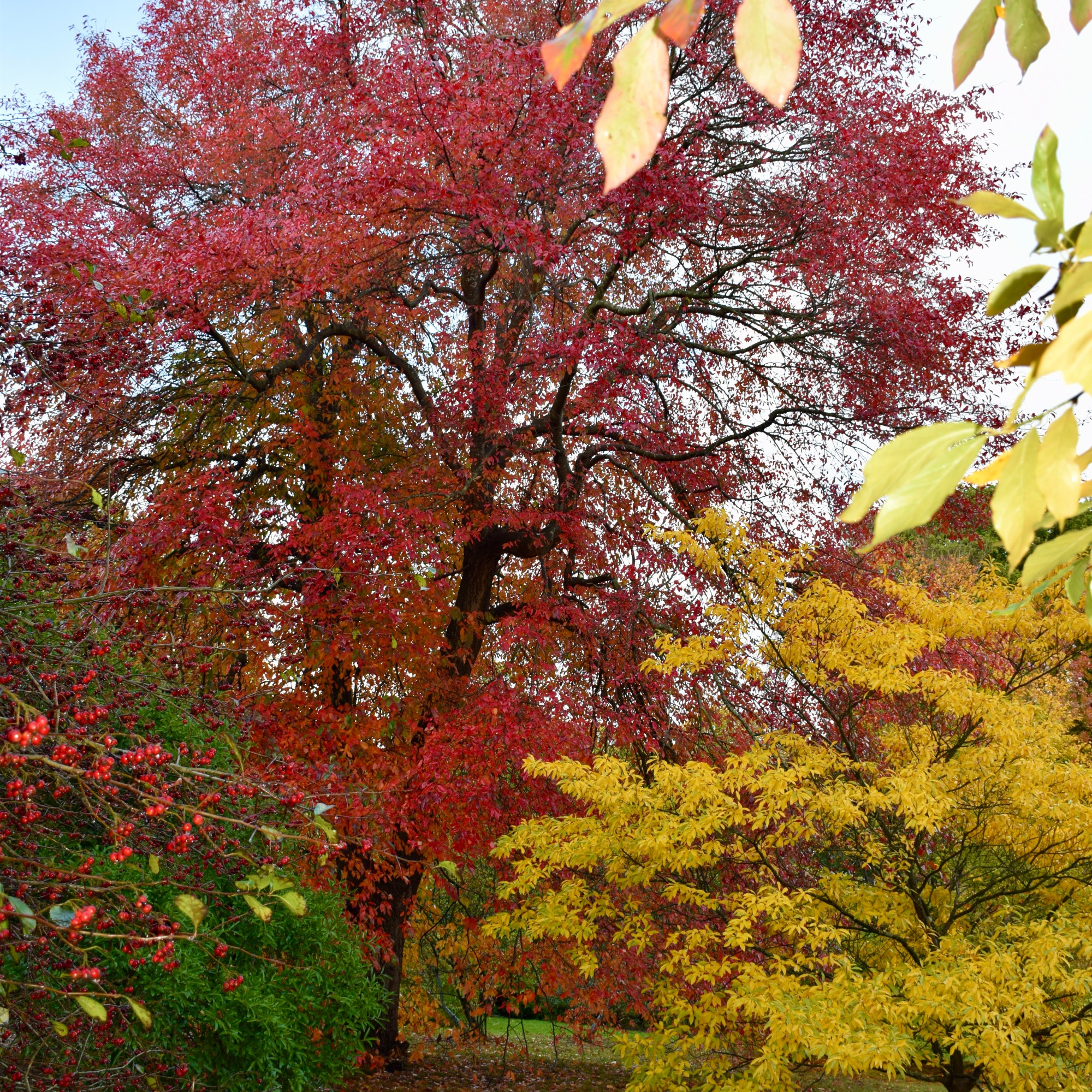
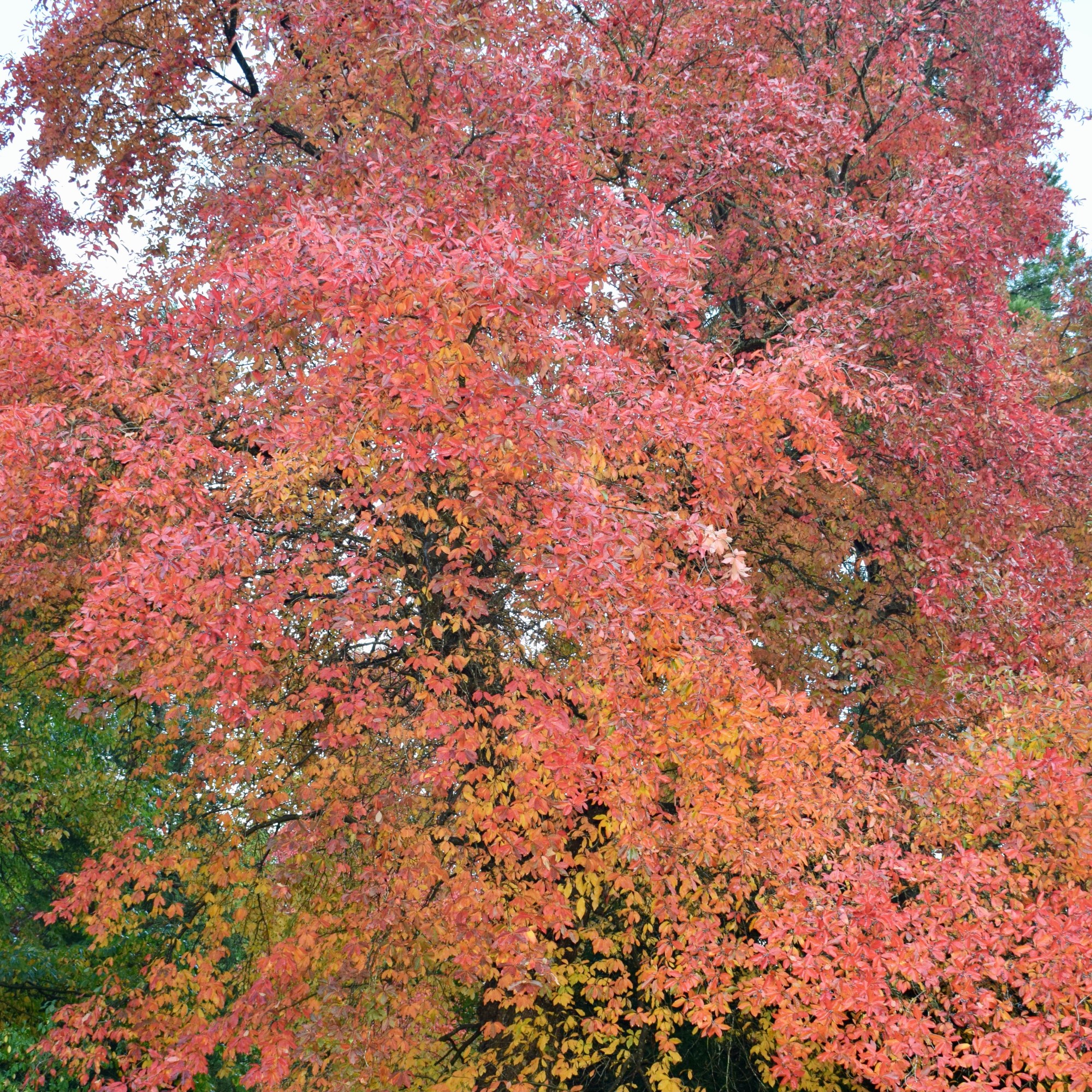
Late autumn is special. The air turns sharp and the bright light transforms colours. Orange and gold are everywhere and previously subtle foliage becomes red and bold. Parrotia persica flames wildly and Liquidambar styraciflua turns vermillion and purple. Oak trees glow with fiery colour and maples turn gold and red. Vines, climbers and varieties of Parthenocissus light up pergolas, fences and walls.
Late autumn annuals such as Rudbeckia hirta, ‘Rustic Dwarfs’ or ‘Goldilocks’ ignite the border. Marigolds and nasturtiums continue to grow well and pansies such as Viola x wittrockiana will flourish into the winter. Colchicum speciosus is a welcome autumnal sight and Cyclamen hederifolium will flower until the end of the season and often into the next.
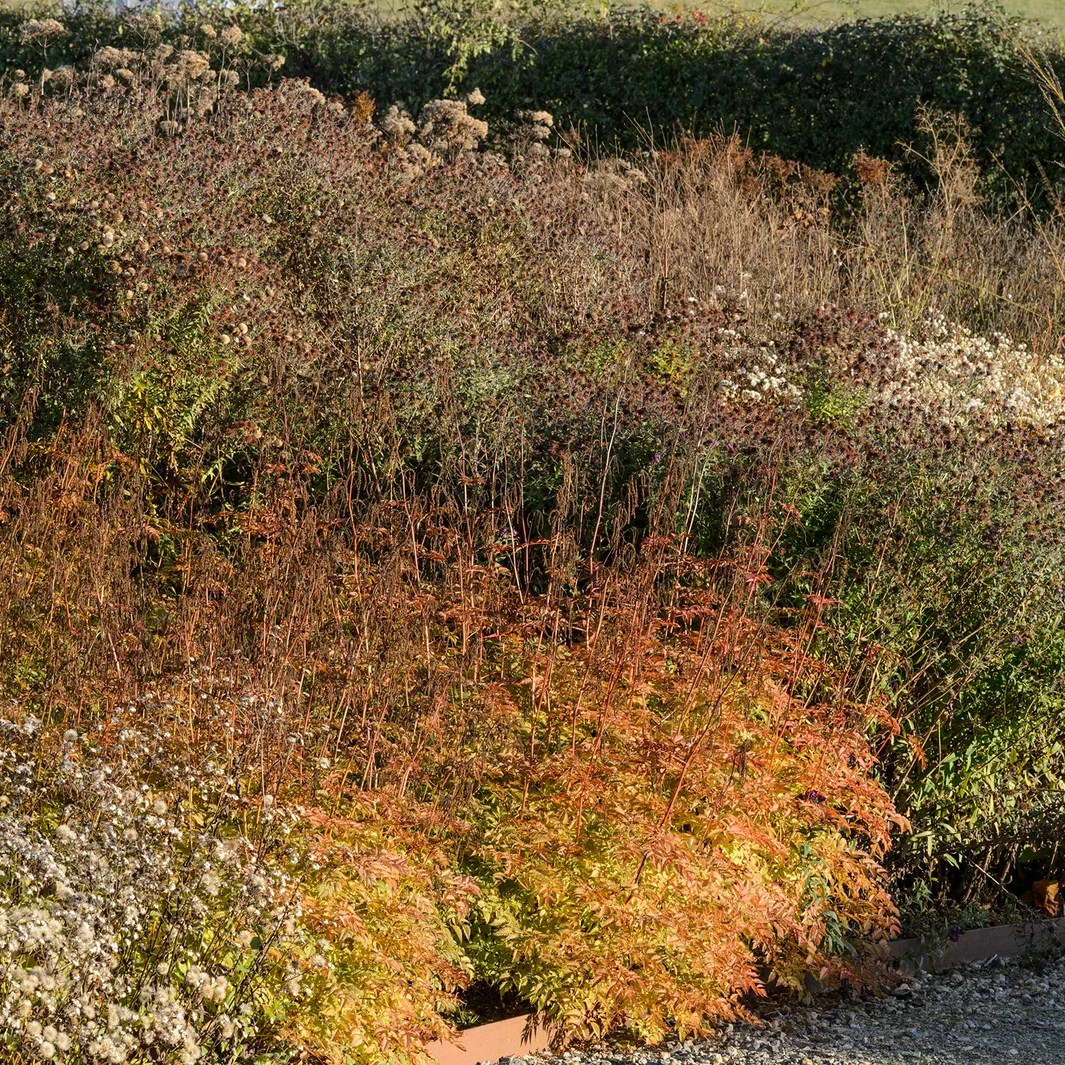
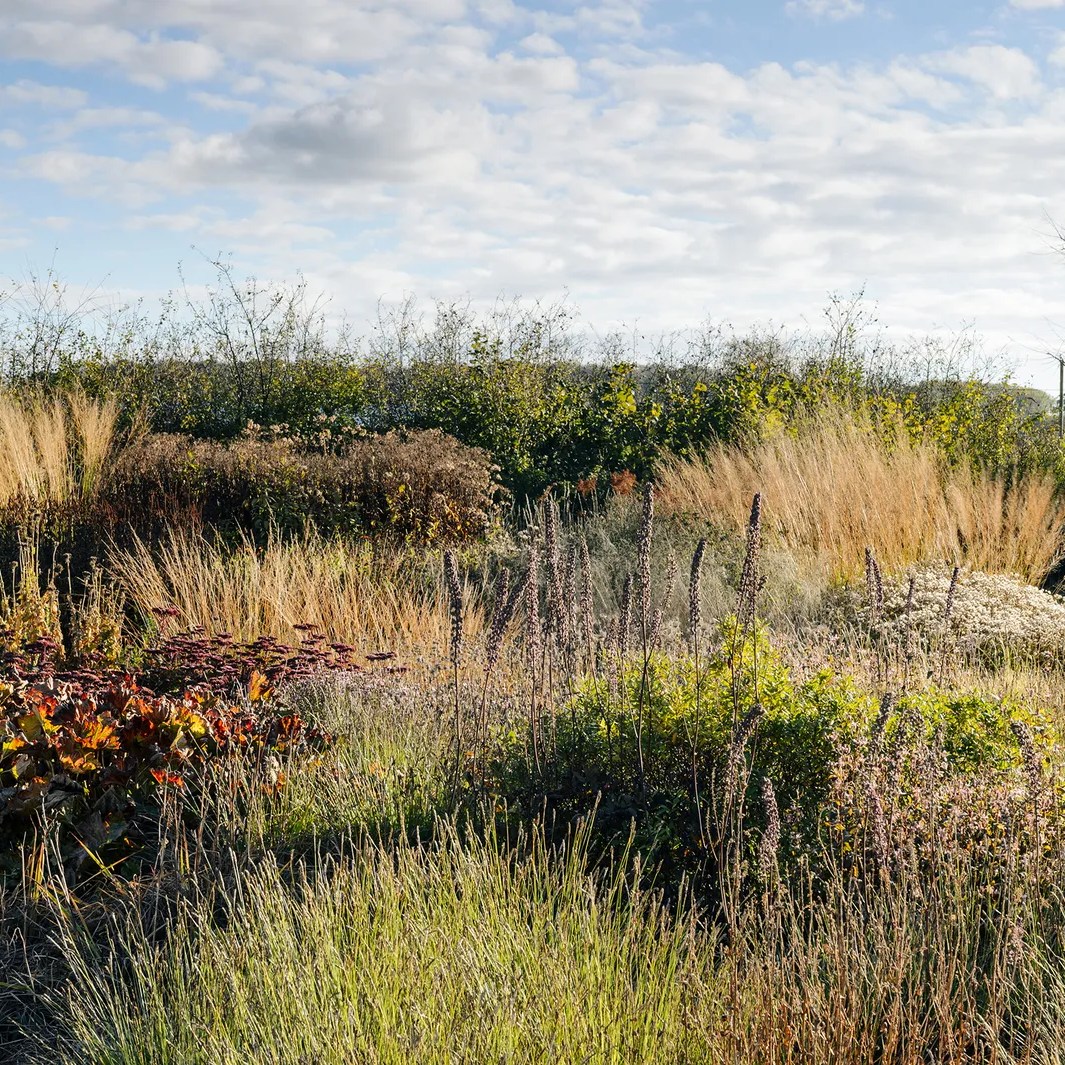
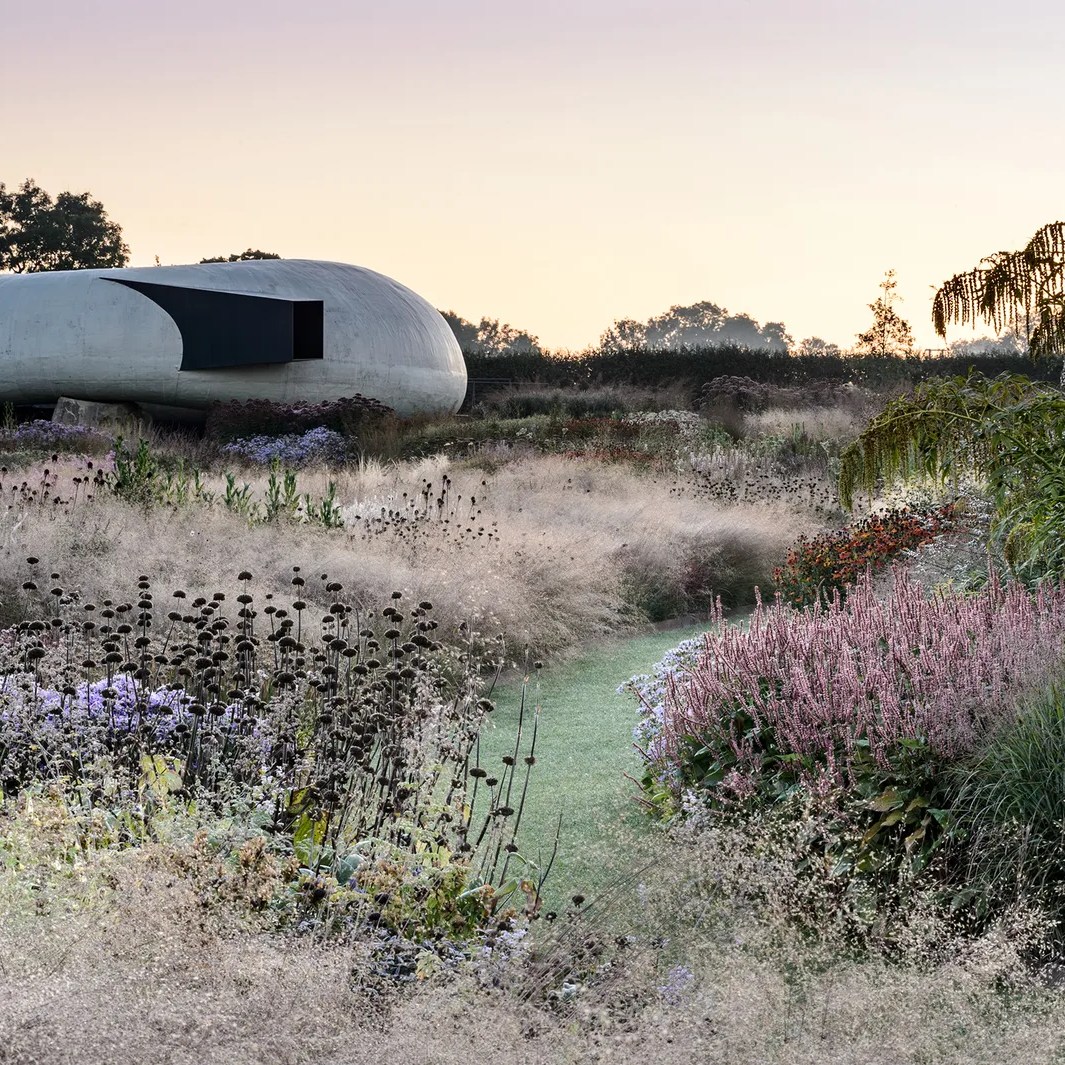
Perennials such as astrantia, asters, echinacea, gentiana, miscanthus and verbena inject further long-lasting colour. Piet Oudolf’s enchanting field and gardens at Hauser and Wirth Somerset is a testament to the magical form of perennials in late autumn. He designs with Amsonia hubrichtii, Aruncus ‘Horatio’ and molinias which give their best at this time. Drawing on influences from Capability Brown in the 18th century and Gertrude Jekyll in the 19th century who introduced more informal styles, Oudolf’s ‘New Perennial Movement’ has extended this informality to a concern for ecology and biodiversity. He uses plants that have an ‘afterlife’ in late autumn and winter which provide nourishment and shelter for birds and insects.
Autumn flowering shrubs include, Fatsia japonica, Genista tinctorial (broom), fuchsia and Mahonia x media. Shrubs with good foliage include Amelanchier canadensis, berberis, callicarpa, Cornus alba, hamamelis, Rosa rugosa and viburnum. Trees at their best include acers, Carpinus betula and the beautiful Prunus x subhirtella ‘Autumnalis’.
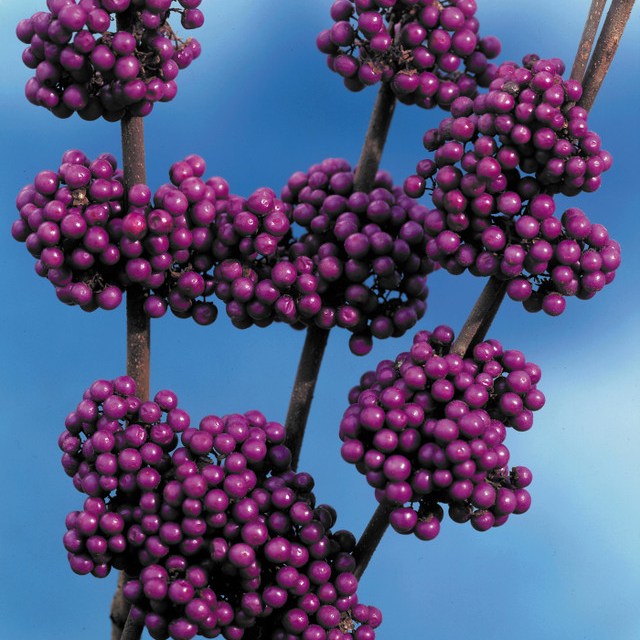
Decorative fruiting trees and shrubs such as rowans, hollies, cotoneasters, pyracanthas, crab apples and roses provide red, orange and yellow fruit. Our favourites include Malus ‘Golden Hornet’, the dense fruit clusters of Sorbus scalaris, the hips of Rosa moyesii, the pure white fruits of snowberry, Symphoricarpus albus and the blue fruits of Mahonia aquifolium. Callicarpa bodinieri var. giraldii ‘Profusion’ produce wonderful autumn berries.
Late autumn frosts on the seedheads of Hylotelephium ‘Herbstfreude’ and Hydrangea arborescens are beautifully atmospheric and effective. Teasels, Dipsacus fullonum, honesty, Lunaria annua and Physalis alkekengi franchetii, offer a unique charm, along with the seeds of Japanese acers.
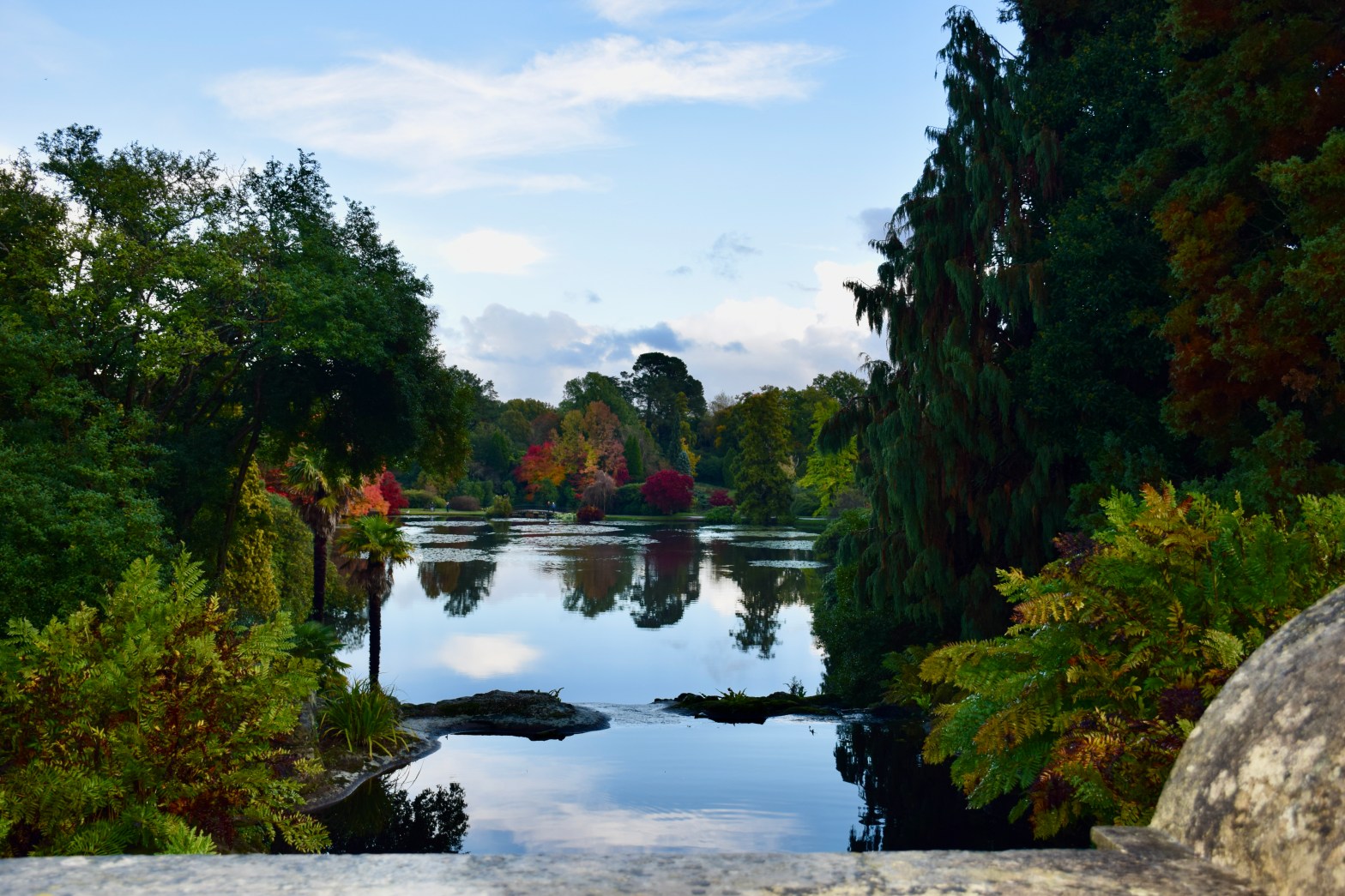
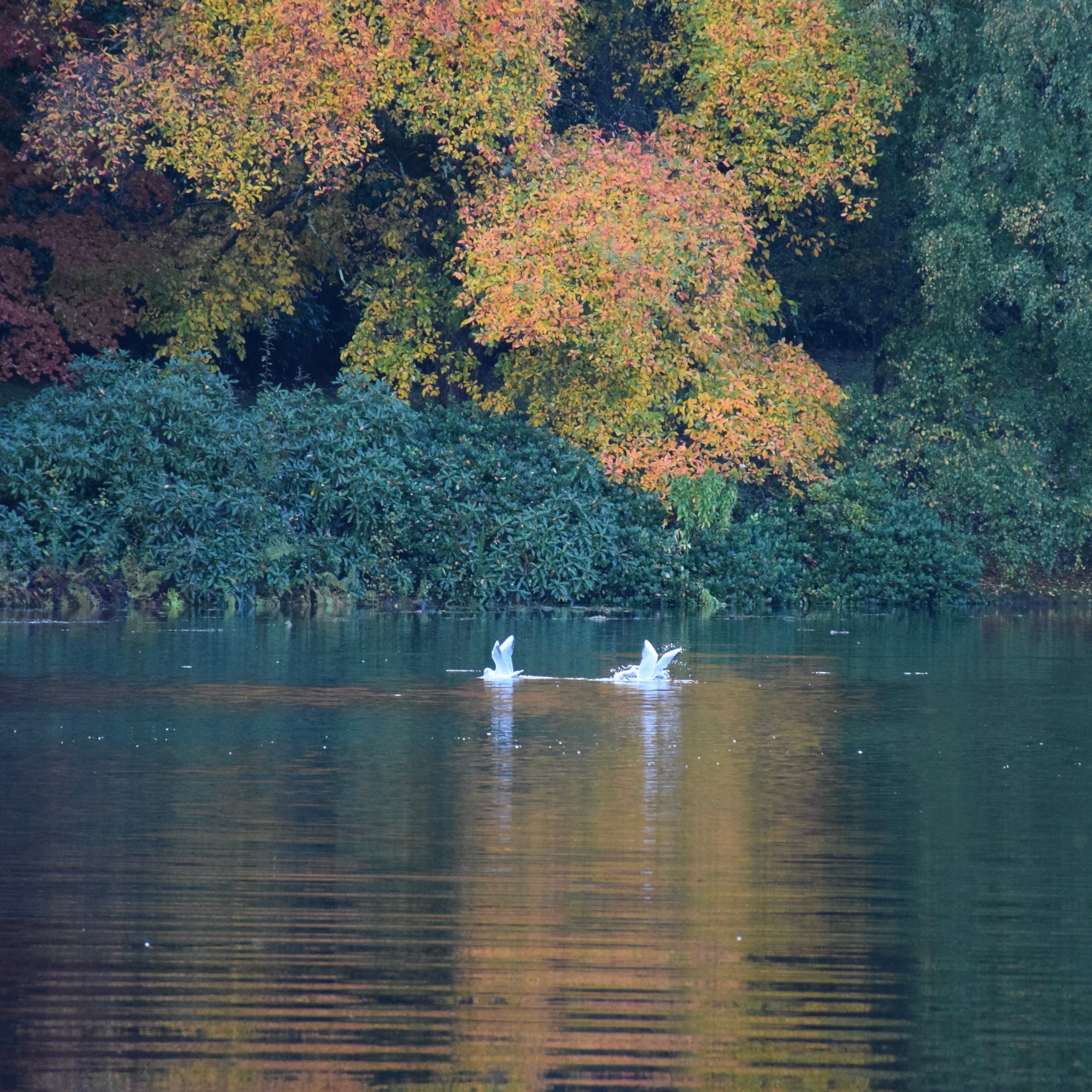
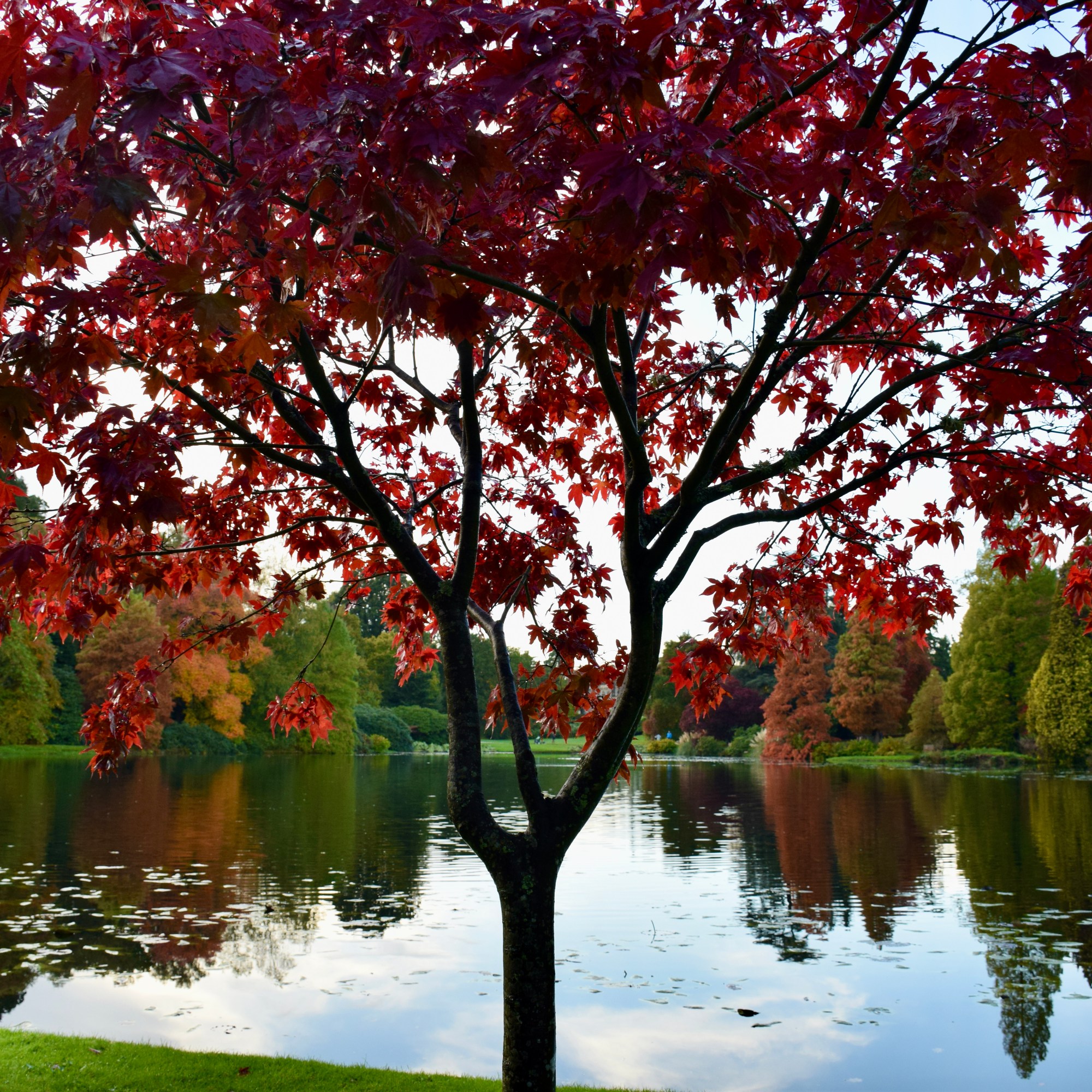
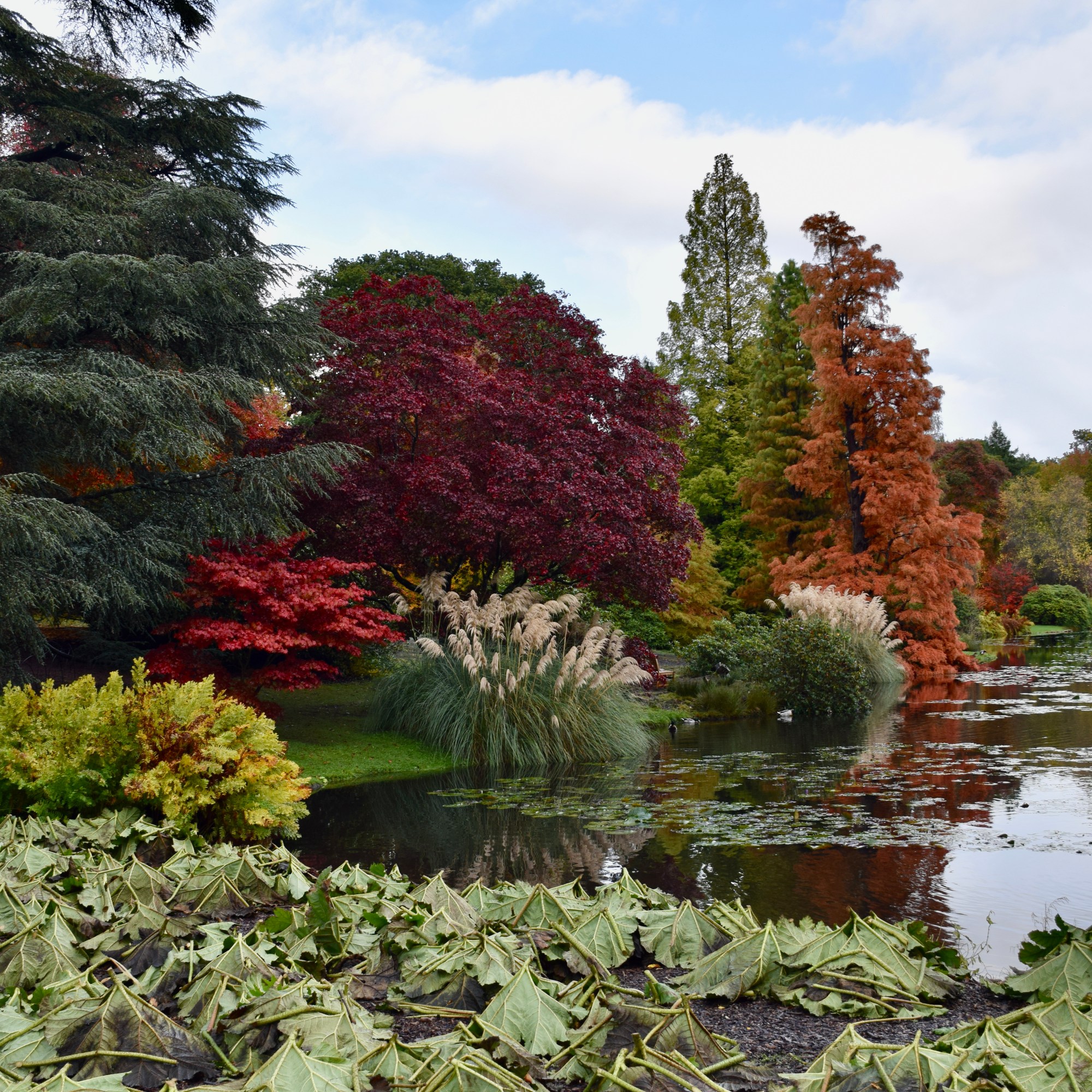
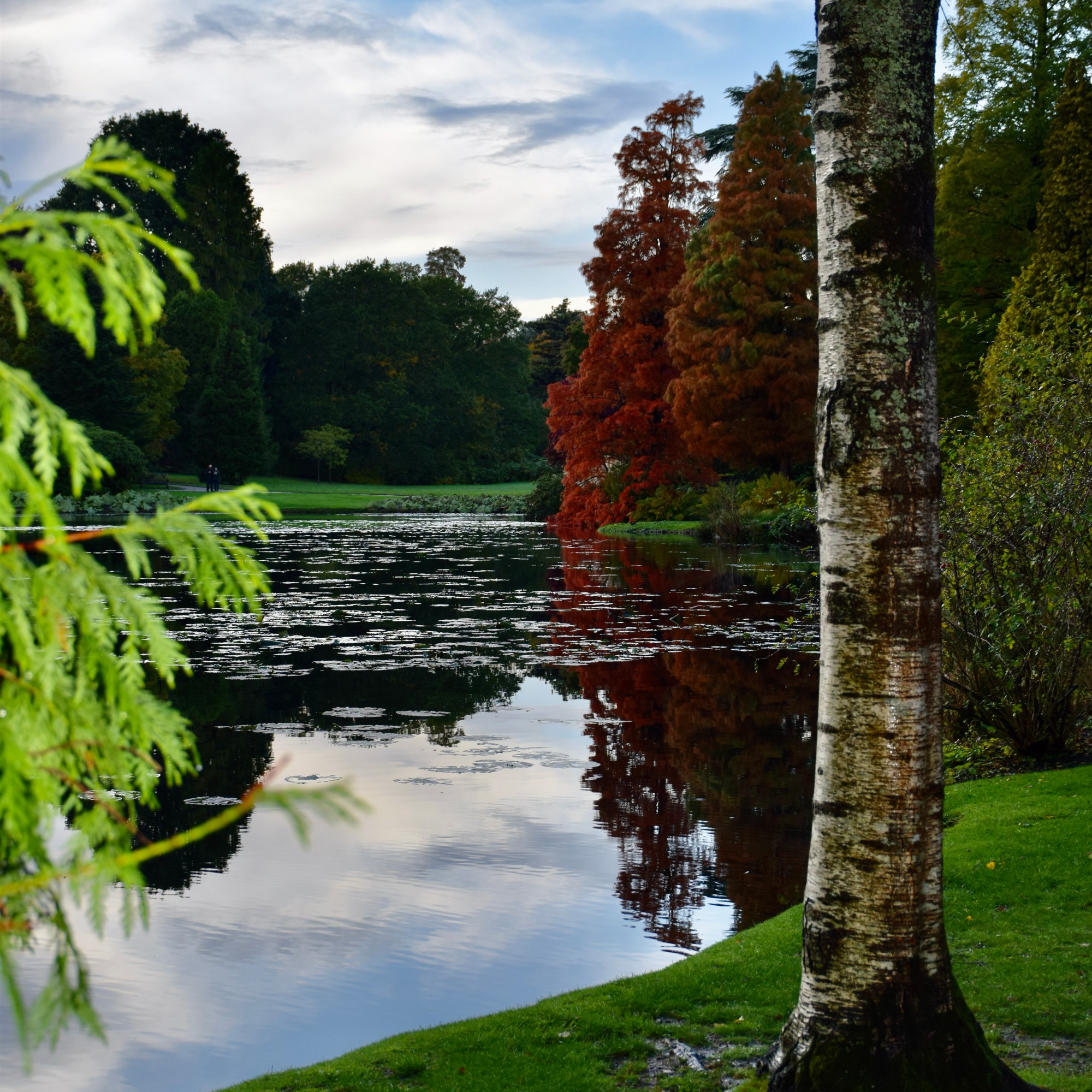
Our recent visit to Sheffield Park Garden and Estate in Sussex highlighted the importance of late autumn colour to lift the spirit as the days gradually become shorter. Now owned by the National Trust, it was originally designed in the 18th century with the help of Capability Brown and autumn colour was added by Arthur Soames in the 1920s and 1930s. The reflections in the water of coloured leaves, soaring conifers, balustraded bridges, cascades and the towers of the Gothic mansion give Sheffield Park an unmistakable sense of place.
Within the park, May brings the first colour climax, with pink and white dogwoods and the thickets of rhododendrons and azaleas which flower within a bluebell ocean. The palette is subtle. The park’s second climax is heralded by the red tinted spindle trees and Prunus sargentii in autumn. By mid-October, the landscape is alight with colour. At ground level, fiery tints break out among azaleas, enkianthus, forthergillas, blueberry, cornus and berberis; the flames rising through amelanchier, parrotia, Japanese maples, Acer circinatum and A. maximowiczianum. These engulf American oaks, the celebrated grove of Nyssa sylvatica and later the liquidambars. The birches have turned to butter yellow, deciduous conifers, taxodium and metasequoia to orange-brown, and the native trees to copper and russet. Added to this are smokey plumes of white pampas grass, blue streaks of Gentiana sino-ornata which combine with evergreen domes and spires.
An inspirational and sensory autumn garden experience providing a final burst of colour before nature’s well-earned rest and renewal.
For further garden and planting design inspiration and advice, please do get in touch with us.
 SSB Garden Design